St. Ives
A Neurodiversity Informed Family Guide
St Ives is visually striking and full of movement, with beaches, narrow streets, and a lively coastal atmosphere. It can feel uplifting and inspiring, but also busy and intense if approached without intention.
This guide reflects our experience visiting St Ives as a family, staying just outside the busiest areas and shaping days around pacing, timing, and flexibility. Rather than trying to experience everything, we focused on choosing when to engage and when to step back, allowing the town to feel enjoyable rather than overwhelming.
Getting There and Arrival
Arriving in St Ives can feel busy, especially during holidays and weekends. Roads narrow as you approach the town, and parking is limited in the centre.
Allowing extra time for arrival, avoiding peak hours where possible, and treating arrival day as a settling day helped reduce pressure. Knowing we had accommodation with off-street parking removed a significant layer of stress and made the transition into the stay feel calmer and more contained.
Getting Around Looe
St Ives is largely explored on foot, but movement through the town can feel crowded at busy times due to narrow streets and steep paths.
Staying just outside the centre made it easier to return to quieter surroundings when needed. Walking early in the day, choosing familiar routes, and limiting time in the busiest areas helped keep energy levels steady. Having access to a car also made it easier to explore nearby coastal areas without relying on public transport.
Structure and Daily Rhythm
St Ives worked best with a simplified daily rhythm. Planning one gentle focus per day, or simply allowing time by the sea, helped avoid overload.
Early mornings were generally calmer and better suited to exploring beaches or walking through town. Afternoons benefited from slower pacing, rest, or returning to quieter spaces. Treating travel days and arrival days as low-expectation days helped transitions feel more manageable.
Sensory Considerations
St Ives can feel more stimulating than some coastal towns, particularly during peak seasons, but it also offers natural grounding spaces.
What to be aware of
• Narrow streets and steep paths can feel crowded and demanding at busy times
• The harbour and beach areas become louder and more visually busy during the middle of the day
• Increased footfall during school holidays and summer events
What helped
• Early mornings and evenings by the sea
• Choosing coastal paths slightly away from the main town centre
• Using quieter beaches and bays when available
• Returning to accommodation when stimulation increased
The sound of the sea, open horizons, and slower pacing outside peak hours provided consistent grounding.
Where We Stayed
Our Stay and Support in Practice
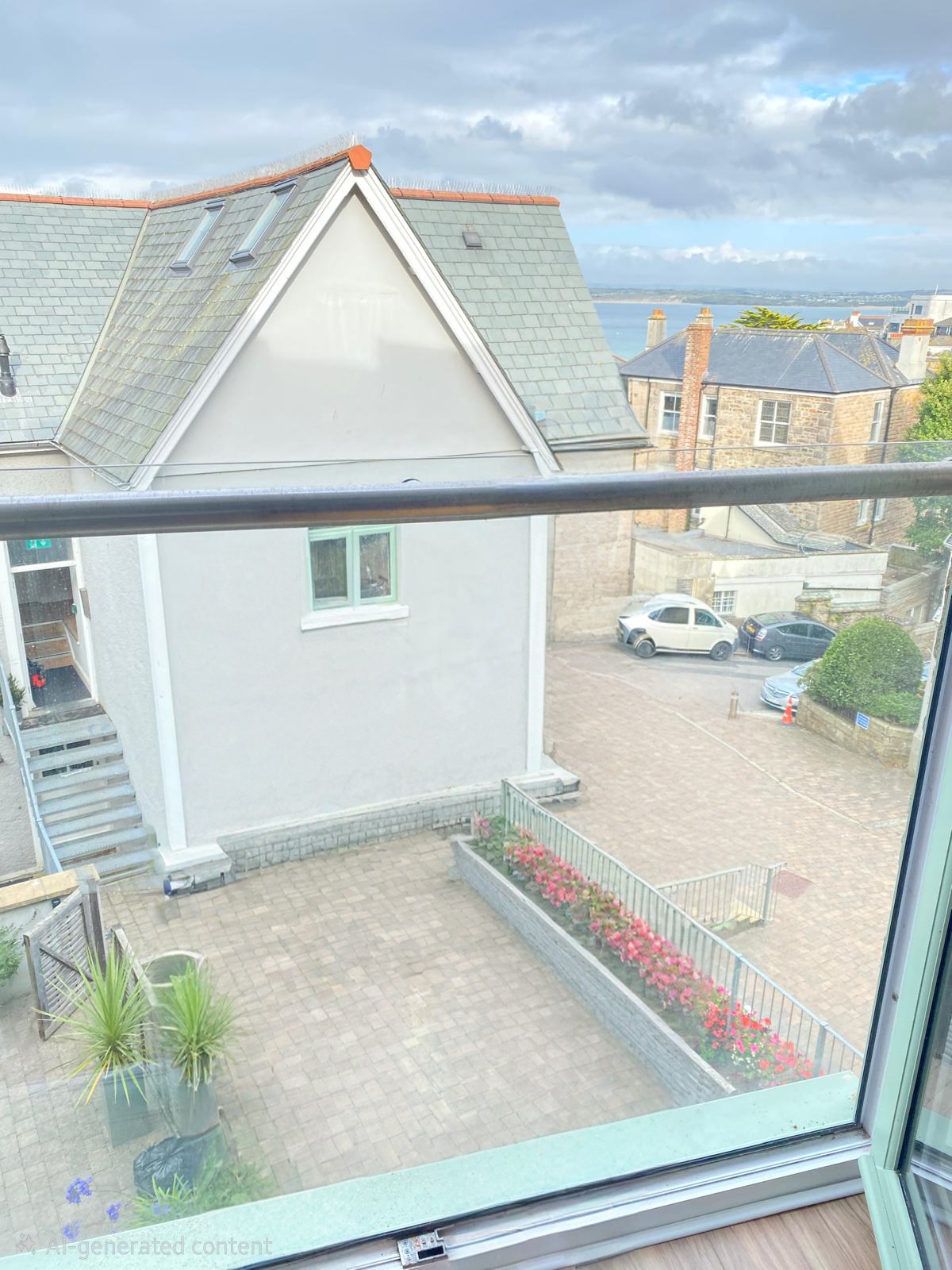
Staying locally in St Ives played a key role in how manageable the experience felt. Having a familiar base within walking distance of the town centre allowed us to remain settled without needing to commute in and out. Being able to return easily to accommodation made a noticeable difference to regulation, particularly during busier periods around the harbour and beaches.
We stayed at Sunday School Court, which offered practical benefits that supported a calmer stay. Off street parking reduced arrival and departure stress, removing the need to navigate busy public car parks or time limited spaces. The location also allowed us to move in and out of the town on foot, keeping daily plans flexible and low pressure.
Having a small supermarket nearby supported simple, predictable food choices and reduced decision making. This made it easier to manage energy across the day without needing to plan meals around busy restaurants or queues.
St Ives does not operate with formal neurodivergent or autism specific programmes. Support instead comes through a combination of UK wide inclusion standards and how the environment is used. While St Ives can feel more intense than smaller coastal towns, particularly at peak times, it also offers natural grounding through open sea views, coastal air, and access to quieter moments outside the busiest hours.
Simple pleasures like ice cream by the harbour were part of the experience, though they also came with practical considerations. Seagulls were very present, and this influenced where and how we chose to eat outdoors. Being aware of this helped us make choices that avoided unnecessary stress.
Remaining within walking distance of key areas reduced reliance on transport and allowed a gentle daily rhythm to form. Familiar routes repeated each day helped lower cognitive load, and returning to accommodation when stimulation built up remained an important regulation tool.
What helped:
• Staying locally rather than commuting in and out
• Accommodation within walking distance but not directly in the busiest streets
• Off street parking reducing stress on arrival and departure
• Nearby supermarket supporting low demand food choices
• Familiar walking routes repeated each day
• Early mornings and evenings near the water
• Returning to accommodation when stimulation increased
• Adjusting outdoor eating due to seagulls
• Flexibility to change plans without pressure
Neurodivergent access and inclusion in the UK
In the UK, many forms of neurodivergent support are provided through national legislation rather than individual venues or destinations. This creates a consistent baseline of access even in places without formal programmes.
In St Ives, these protections applied across accommodation, shops, cafés, transport, and public spaces.
What is standard and protected in the UK:
• Assistance dogs are legally allowed in almost all public places, including shops, cafés, restaurants, transport, and accommodation
• Businesses are not permitted to refuse entry to guide dogs or assistance dogs
• There is no requirement to explain or justify invisible disabilities to access legal rights
• Equality Act protections apply to neurodivergent people, including autism, ADHD, and other cognitive differences
• Staff are generally expected to make reasonable allowances, even if awareness levels vary
• Stepping away, opting out, or taking breaks is widely accepted and rarely challenged
These protections reduce the need for constant advocacy and create a baseline level of safety and predictability when travelling within the UK.
How this showed up in practice in St Ives
• Assistance dogs were accepted as standard across venues
• Small businesses varied in awareness but were rarely challenging
• Quieter seating was sometimes available when chosen carefully
• There was little pressure to rush or justify pacing
• Slower movement and flexible plans felt socially acceptable
This meant support came from rights, timing, and choice, rather than formal neurodivergent schemes.
Things to See (Gently)
St Ives offers plenty to explore, but approaching the town selectively helped the experience feel more balanced. Choosing when and where to engage made it easier to enjoy the setting without becoming overwhelmed.
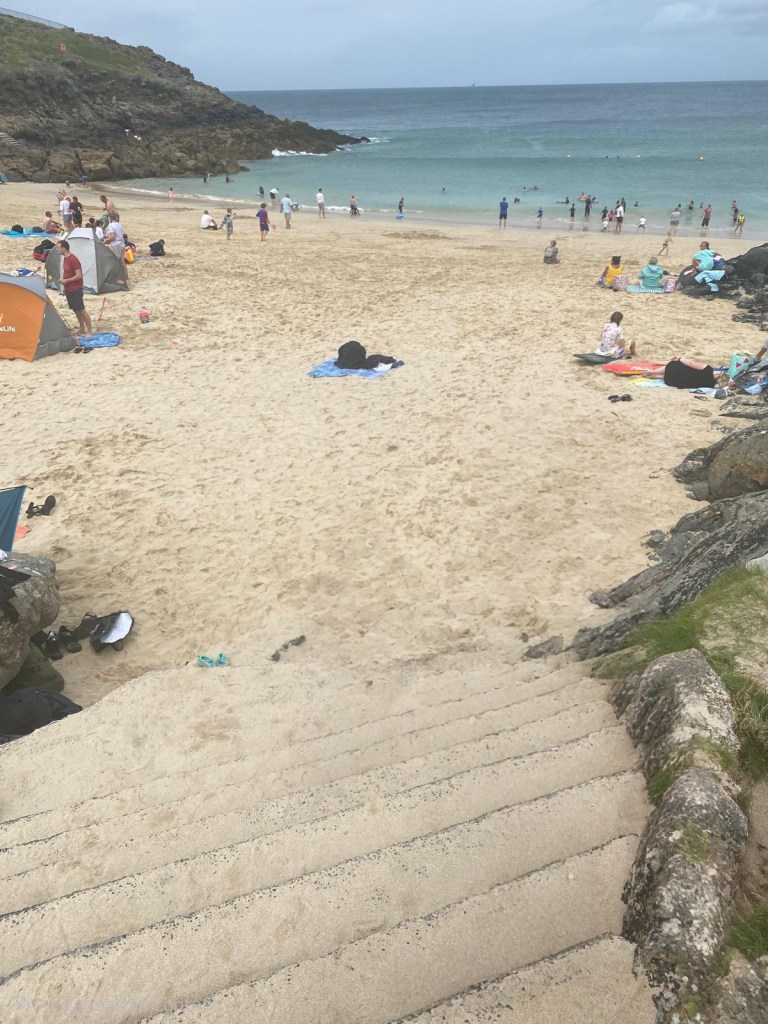
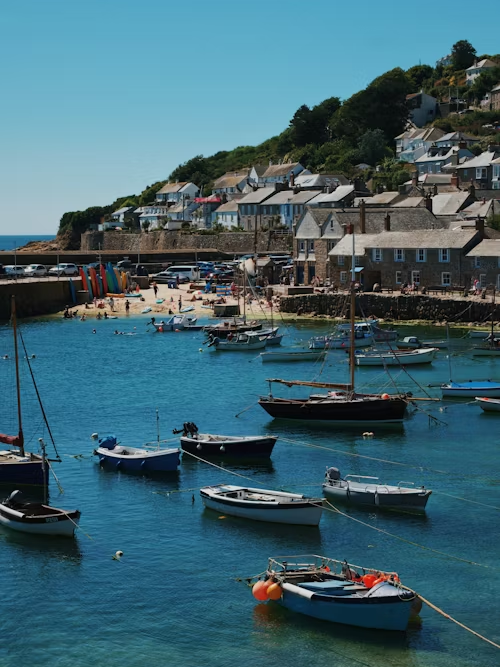
Time spent on the beach, particularly earlier in the day, offered open space, sea air, and calm without pressure. Sitting near the harbour to watch boats come and go provided a slower, grounding way to experience the town without needing to navigate busy streets.
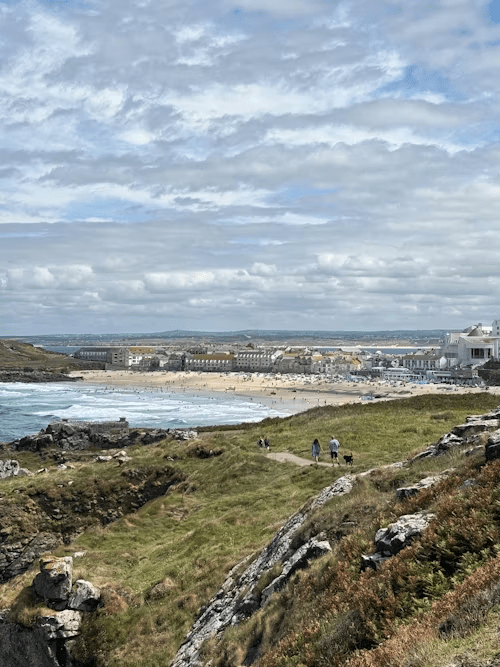
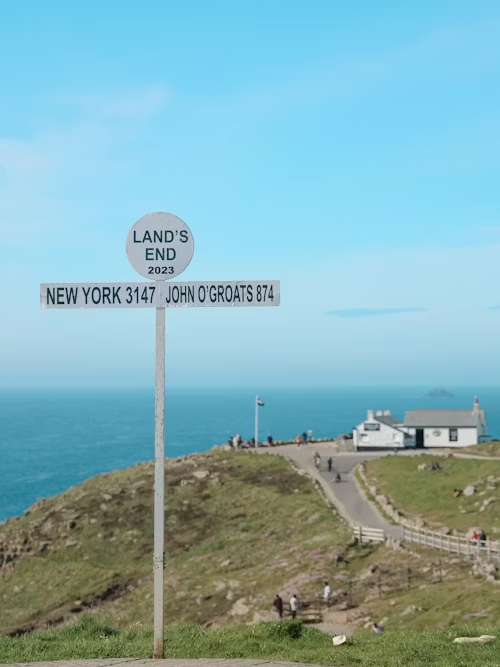
Nearby coastal walks offered quieter routes with open views, allowing fresh air and movement away from crowds. Short drives to surrounding areas, including a visit towards Land’s End, worked best when approached as brief outings rather than full days, helping keep energy levels supported.
When, Where, and How St Ives Works Best
When St Ives works best
• Late spring and early summer May to early July offers longer daylight and coastal calm before peak holiday crowds arrive.
• Early autumn September often feels quieter while still warm enough for beach walks and time by the sea.
Hardest period
• Late July and August, when footfall increases significantly and the town centre, beaches, and harbour feel much busier.
Where St Ives works best
• Slightly set back accommodation Staying just outside the busiest streets allows easier retreat while remaining walkable.
• Quieter beaches and coastal paths These provide space, fresh air, and natural grounding away from the town centre.
• Early or later day harbour areas Timing makes a noticeable difference to sensory load.
Areas that can feel harder
• The main harbour and central beaches at peak times
• Narrow streets and steep paths during busy afternoons
How St Ives works best
• Build days around familiar walking routes
• Use accommodation as an anchor space between outings
• Visit beaches and the harbour early in the day or later in the evening
• Balance busier periods with quieter coastal or residential areas
• Treat rest, pacing, and flexibility as part of the plan
St Ives works best when intensity is balanced with predictability and access to retreat.
What We’d Do Again & What We’d Do Differently
We would choose the same style of accommodation again and continue to prioritise quieter surroundings with easy access to the town. Visiting at calmer times and keeping days light worked well.
Next time, we would continue to build in retreat time away from the centre and rely on nearby coastal areas for balance.
Alchemy Souls Calm Anchors for St Ives
• Accommodation as an anchor
Staying slightly set back from the busiest streets provided a reliable place to return to when stimulation increased. Being within walking distance but not directly in the centre helped maintain balance between access and rest.
• Coastal space as an anchor
Time spent by the sea, on quieter beaches, and along coastal paths offered natural grounding. Open horizons, fresh air, and steady movement helped regulate energy levels, especially when the town felt busy
• Timing as an anchor
Early mornings and evenings changed the experience significantly. Visiting the harbour and beaches outside peak hours reduced sensory load and made movement through the town feel more manageable.
Final Thoughts
St Ives offers beauty, energy, and inspiration, but it asks for intention. When approached gently, with thoughtful pacing and a supportive base, it can be enjoyed in a way that feels manageable and rewarding.
This guide reflects what worked for us, not as a rulebook, but as a reference for families considering whether St Ives might suit their needs, and how to experience it in a way that feels calm, supportive, and kind.
Building calmer travel, together
Our destination guides help individuals and families find places that genuinely support regulation and wellbeing. We also collaborate with travel operators who value inclusive, thoughtful experiences and want their spaces reviewed with care and honesty.
 Alchemy Souls Travel